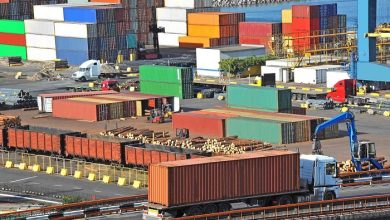
Modern supply chains have mastered the art of pushing consumer electronics and enterprise hardware outward. Factories in Asia turn raw minerals into assembled smartphones, servers, and connected appliances, sending them across oceans to retail shelves and consumer doorsteps with ruthless efficiency. Yet the moment a device reaches the end of its useful lifespan, that sophisticated pipeline breaks down. What follows is often an unorganized trickle into desk drawers, storage closets, and municipal landfills.
Electronic waste represents the fastest-growing solid waste stream on the planet. Millions of tons of decommissioned hardware vanish into generic disposal streams each year, carrying toxic chemicals into surrounding ecosystems while permanently locking away scarce, energy-intensive raw materials. True progress in electronics recycling does not stall because recycling technologies are inadequate. It stalls because the collection architecture is broken. Reverse logistics—the specialized discipline of capturing, moving, and processing equipment back upstream from the end user—is the essential operational engine required to turn theoretical circularity into an industrial reality.
The Operational Complexity of Moving Backward
Moving freight forward is predictable. Goods are packed in uniform cartons, loaded onto standardized pallets, and dispatched along established freight lanes with defined delivery windows. Moving freight in reverse is the operational opposite. It is decentralized, volatile, and mechanically chaotic.
When enterprise servers, office workstations, or personal devices enter the reverse pipeline, they arrive in varying states of decay. Some are functional off-lease machines, others are shattered remnants, and many lack charging cables, mounting brackets, or original containers. Packaging is inconsistent, carrier pick-ups are fragmented across millions of disparate residential and commercial addresses, and arrival volumes fluctuate wildly based on upgrade cycles and holiday seasons.
Standard freight networks are fundamentally ill-equipped to manage these conditions. Decommissioned electronics cannot simply be tossed into standard dumpsters or bulk freight haulers. Lithium-ion batteries that suffer punctures or excessive thermal stress during transit present severe thermal runaway and fire risks for carriers and sorting facilities. Specialized reverse logistics operations introduce strict containment protocols, hazardous material classification systems, and certified transit networks designed to move damaged or end-of-life battery chemistry safely over long distances.
Transforming Urban Waste into Critical Feedstock
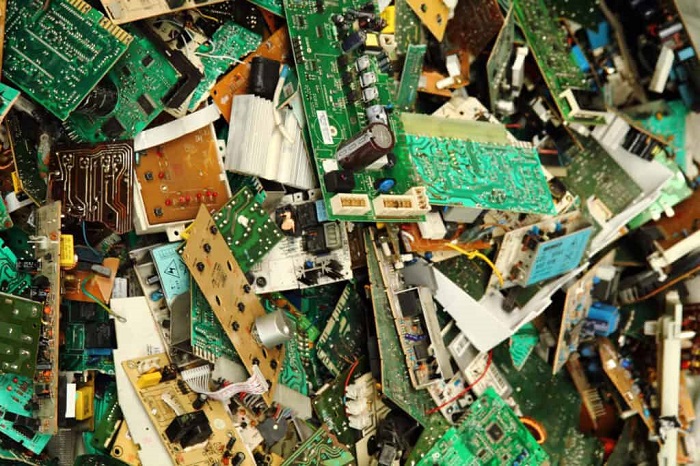
The economic justification for electronics recycling rests on a counterintuitive geological reality: the concentration of valuable metals in discarded printed circuit boards is significantly higher than that found in virgin mineral deposits. A single metric ton of aggregated circuit boards contains orders of magnitude more gold, copper, palladium, and rare earth elements than an equivalent weight of raw mined ore.
Yet high-efficiency smelting facilities and hydrometallurgical refiners cannot operate on sporadic, piecemeal drop-offs. These multi-million-dollar extraction plants require consistent, high-tonnage feedstocks to maintain continuous thermal processes and chemical reactions. Without an integrated reverse network collecting, aggregating, and bulk-shipping materials from regional collection nodes to primary processors, the economics of industrial urban mining collapse.
When reverse logistics pipelines fail, recyclers starve for feedstock. Manufacturers are then forced to depend on newly extracted virgin ores, driving extensive carbon emissions, habitat destruction, and exposure to geopolitical supply chain shocks. An efficient reverse supply chain acts as an above-ground mine, reclaiming critical elements that have already been refined, shaped, and shipped.
The Triage Stage: Maximizing Value Through Asset Recovery
Effective reverse logistics does far more than crush old machines into scrap. The most sustainable electronic component is the one that never requires recycling at all. High-performing reverse programs use sophisticated triage checkpoints to route each returned asset toward its highest possible economic and ecological utility.
Functional Testing and Asset Refurbishment
When business hardware leaves an enterprise environment after a three-year lease cycle, the silicon inside is rarely obsolete. Through IT Asset Disposition (ITAD) protocols integrated directly into reverse logistics hubs, technicians inspect incoming shipments, verify physical integrity, and test component performance. Working machines are cleaned, updated, and diverted into secondary markets or re-deployed across budget-conscious sectors. Extending the operating life of an enterprise laptop or server array by even two or three years cuts its cumulative lifecycle carbon footprint dramatically.
Data Sanitization and Corporate Risk Mitigation
One of the primary reasons enterprises hoard retired hardware in secure storage closets rather than turning it over for recycling is fear of data exposure. A discarded hard drive carrying proprietary intellectual property or regulated customer records creates catastrophic liability. Professional reverse logistics programs bridge this gap by enforcing strict data sanitization protocols at regional intake hubs. Drives are either cryptographically wiped according to rigorous defense standards or fed into mechanical shredders under unbroken chains of custody, clearing the psychological and legal hurdles that prevent businesses from letting go of retired assets.
Component Harvesting and Controlled Dismantling
Devices that fail functional diagnostics do not head straight to a generic shredder. Many contain intact power supplies, modular display panels, memory modules, and heat sinks that can be harvested to repair other units. Only after technicians strip viable components does the remaining shell move to mechanical depollution, hazardous material removal, and downstream smelting. This tiered evaluation preserves the embodied energy of complex manufactured sub-assemblies.
Regulatory Pressure and Extended Producer Responsibility
The traditional corporate mindset viewed product disposal as an externalized consumer problem. That era is coming to a close. Governments worldwide are passing aggressive Extended Producer Responsibility (EPR) mandates and right-to-repair statutes that require electronics brands to take physical and financial responsibility for their products through end-of-life.
Brands that treat reverse logistics as an administrative afterthought face regulatory penalties, export bans, and reputational backlash from environmentally conscious buyers. Conversely, companies that design proactive return architectures gain competitive separation. Turnkey mail-back programs, localized retail drop-off kiosks, and automated trade-in incentives not only satisfy statutory compliance but also bring consumers back into the brand ecosystem for their next hardware purchase.
Engineering the Infrastructure for Real Circularity
For decades, consumer electronics manufacturing operated on a strictly linear trajectory: extract, fabricate, distribute, and discard. That model is no longer sustainable amid raw material scarcity and escalating disposal challenges. Designing a smartphone that uses recycled aluminum or non-toxic adhesives achieves very little if the device ultimately rots in an abandoned landfill.
Real circularity is not an abstract design philosophy; it is a physical, operational challenge. By deploying specialized handling, intelligent triage, and high-volume aggregation, reverse logistics provides the physical infrastructure that makes materials recovery viable at scale. The companies that master the science of moving products backward will not only protect the planet from toxic waste—they will secure the critical raw materials necessary to manufacture the technologies of the next century.