
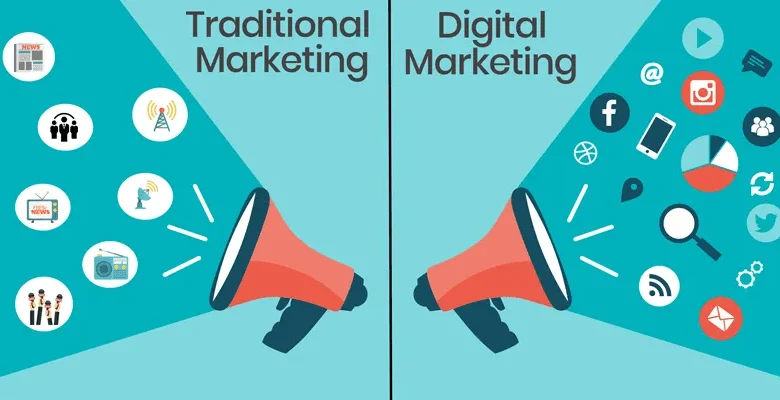
Marketing has evolved dramatically over the years, shifting from conventional offline methods to innovative digital strategies. While both digital and traditional marketing aim to promote products and engage customers, they differ significantly in approach, tools, and effectiveness. Understanding these differences helps businesses choose the right methods to reach their target audience more efficiently.
Understanding Digital Marketing
Digital marketing uses the internet and electronic devices to promote products or services. It includes online platforms such as websites, search engines, social media, email, and digital advertising networks. Its strength lies in interactivity, real-time insights, and the ability to reach global audiences instantly.
Understanding Traditional Marketing
Traditional marketing relies on offline channels to promote products. Common methods include TV commercials, radio ads, newspapers, magazines, billboards, flyers, and direct mail. It has been used for decades and remains effective for reaching local audiences and creating brand visibility.
Key Differences Between Digital and Traditional Marketing
1. Mode of Communication
- Digital Marketing: Uses online interactive channels such as social media, email, and websites. Customers can instantly respond and engage.
- Traditional Marketing: Uses offline media such as print, TV, and radio. Communication is generally one-way.
2. Targeting Capabilities
- Digital Marketing: Enables precise targeting based on demographics, interests, online behavior, location, and more.
- Traditional Marketing: Targeting is broader and less precise, focusing on general audiences.
3. Cost Efficiency
- Digital Marketing: More cost-effective with options like pay-per-click ads, social media campaigns, and SEO. Suitable for small and large businesses alike.
- Traditional Marketing: Often more expensive due to production and distribution costs (TV, radio, print).
4. Measurability
- Digital Marketing: Provides real-time analytics such as clicks, impressions, conversions, and audience engagement.
- Traditional Marketing: Difficult to track exact results unless supported by surveys or customer feedback.
5. Audience Reach
- Digital Marketing: Offers global reach with minimal effort. Campaigns can be launched across multiple countries instantly.
- Traditional Marketing: Best suited for local audiences; reaching global markets is expensive and slow.
6. Customer Interaction
- Digital Marketing: Encourages two-way communication through comments, reviews, messages, and social engagement.
- Traditional Marketing: Communication is static, offering limited interaction.
7. Content Flexibility
- Digital Marketing: Allows quick edits, updates, and optimization of campaigns.
- Traditional Marketing: Once published (e.g., billboards or print ads), changes are costly and difficult.
8. Speed of Execution
- Digital Marketing: Campaigns can go live within minutes and be adjusted anytime.
- Traditional Marketing: Requires planning, printing, and broadcasting arrangements that take longer.
Advantages of Digital Marketing
- Highly targeted advertising
- Real-time performance tracking
- Lower cost compared to traditional methods
- Greater audience engagement
- Global accessibility
- Personalization through data insights
Advantages of Traditional Marketing
- Strong brand visibility for local audiences
- Tangible promotional materials like brochures
- Effective for older demographics
- Trustworthiness associated with traditional media
- High impact through TV and print ads
Which Approach Is Better?
The choice depends on the business goals, target audience, and budget. Many companies now use a hybrid strategy, combining the broad reach of traditional marketing with the precision and analytics of digital marketing. This approach enhances visibility while maximizing engagement and conversions.
FAQs
1. Can digital marketing completely replace traditional marketing?
Not entirely. While digital marketing dominates today, traditional marketing still plays a crucial role in industries where physical presence and local visibility matter.
2. Which marketing method is better for small businesses?
Digital marketing is generally more affordable and offers precise targeting, making it ideal for small businesses.
3. Why is data important in digital marketing?
Data helps marketers understand user behavior, improve campaigns, and increase conversion rates with personalized strategies.
4. Are traditional marketing campaigns still effective?
Yes, especially for local branding, older audiences, and industries where physical media still influences buying decisions.
5. How quickly can digital marketing show results?
Some methods like pay-per-click ads show results immediately, while others like SEO take longer but provide sustainable growth.
6. Is traditional marketing more trustworthy?
Many consumers still trust print and television ads because they are seen as established and credible sources.
7. Can a business use both digital and traditional marketing together?
Yes, combining both methods often creates a stronger and more balanced marketing strategy.